
Automated Ballooning and Characteristic Extraction for Aerospace FAI Documentation

Automated Ballooning and Characteristic Extraction for Aerospace FAI Documentation

Manual ballooning and data entry slowed first article inspection for flight hardware. iCaptur automated callout recognition and extraction, cutting preparation time by 75% and keeping every balloon traceable to its inspection record.

The Challenge

Preparing FAI documentation required engineers to manually review engineering drawings, assign sequential balloon numbers to individual dimensions, and transfer the corresponding characteristics into inspection records. For aerospace components, where every dimension and specification must be accounted for, this process demanded considerable engineering time and attention to detail.

The effort grew with multi-page technical drawings containing numerous dimensions, tolerances and geometric specifications. Each characteristic had to be identified, numbered and accurately transferred to inspection sheets, and these manual steps risked transcription errors, mismatched references and inconsistencies between annotated drawings and inspection records.

FAI documentation is what verifies flight hardware against engineering requirements, so a slow preparation cycle could push back inspection and delay the point at which parts are ready for production. The manufacturer needed a more consistent approach to FAI preparation that reduced manual effort while preserving the traceability of individual inspection characteristics.

Solution


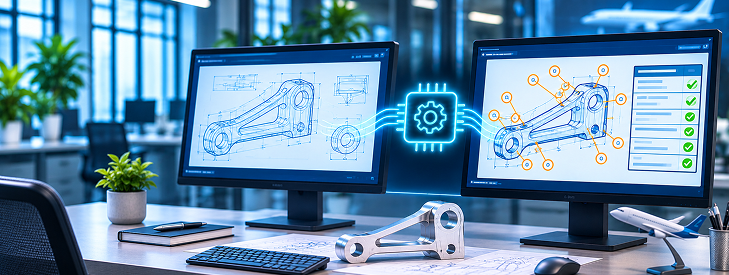
iCaptur integrated drawing digitization and OCR, GD&T extraction, automated ballooning and checklist generation into a connected FAI preparation workflow, so ballooning is complete before inspection planning begins. Engineering teams moved from annotating drawings and entering data by hand to reviewing structured outputs.

  • Automatic Callout Detection: Multi-page PDF drawings were processed to pick out the dimensions and specifications relevant to inspection. This took the sheet-by-sheet reading and logging of characteristics off the engineering team.
  • Numbered Balloons Placed on the Drawing: Characteristics were numbered in order, with each balloon placed at the point on the sheet where its callout appears. The sequence ran unbroken across pages, so any inspection entry could be traced back to its place on the source drawing.
  • Characteristic List Built in the Same Pass: Each recognized characteristic was written to a list alongside its balloon number, nominal value and tolerance. The ballooned drawing and the list came out of a single extraction run, so the numbers on the sheet always matched the rows in the inspection data.
  • Engineering Review and Verification: Instead of identifying, numbering and entering every characteristic by hand, engineers could review the generated outputs and verify the extracted information, freeing time for higher-value engineering work.

Outcome

FAI preparation time dropped by 75% once ballooning and characteristic extraction were automated, getting drawings to inspection-ready documentation sooner. Engineers spent less time numbering and recording individual characteristics across drawing packages.

Transcription errors were reduced to near zero by minimizing manual data transfer between annotated drawings and inspection records. Each balloon number stayed linked to its characteristic, improving traceability and reducing mismatched references.

The standardized workflow also improved consistency across multi-page drawing packages. With less time spent on documentation preparation, engineering teams could focus on reviewing inspection requirements and progressing FAI activities. This reduced documentation-related delays and moved flight hardware closer to production readiness.