
Automated Parametric Design Generation for Switchgear and Control Panels

Automated Parametric Design Generation for Switchgear and Control Panels

A parametric CAD workflow converts spreadsheet-based order specifications into coordinated switchgear drawings, single-line diagrams, and BOMs. Embedded engineering rules govern component placement, busbar sizing, and clearances, enabling repeatable design generation and reducing manual drafting and reconciliation across deliverables.

The Challenge

An electrical equipment manufacturer was managing low-tension switchgear and control panel orders through a largely manual engineering workflow. Although configurations were often variations of existing panels, engineers repeatedly interpreted the order indent, prepared General Arrangement drawings and Single-Line Diagrams, and compiled the BOM separately.

This separation created both engineering overhead and reconciliation risk. Components added to a drawing could be missed in the BOM, while layout, busbar sizing, clearance and placement decisions depended on individual designer practices. The workflow needed a way to reuse established configurations while keeping the design logic and resulting documentation consistent.

Solution

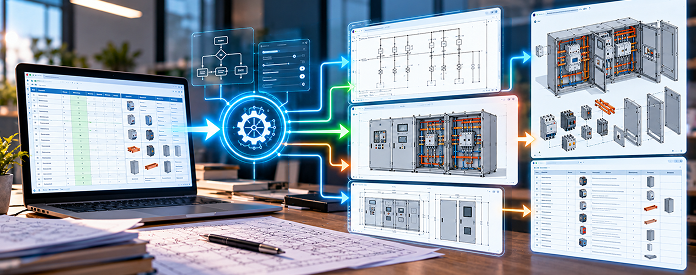
  • Single-Input Design Generation: The sales indent captured in a spreadsheet becomes the primary input for the design workflow. From the specified panel configuration, the system generates the General Arrangement, Single-Line Diagram, title block and BOM in a single run, reducing the need to recreate each document independently.
  • Unified Panel Model: The drawing set and BOM are generated as representations of the same underlying panel model. Components, ratings and configuration details therefore remain aligned across outputs rather than being reconciled manually after separate preparation.
  • Encoded Engineering Rules: Panel standards are converted into explicit design rules covering compartment layout, busbar selection against ratings, clearances and component placement. This makes established engineering decisions reviewable and repeatable instead of relying solely on individual designer knowledge.
  • Scriptable CAD Generation: CAD geometry is produced through a programmable execution layer, allowing rule or configuration changes to regenerate affected drawings. The approach supports parametric reuse rather than treating each drawing as a static template requiring manual modification.
  • Reusable Design Studio: The same model-driven approach can extend beyond switchgear documentation into control-panel design for battery systems, where the product definition can also drive PPAP documentation and customer presentation outputs. This creates a common design basis across multiple engineering deliverables.

Outcome

The solution converts repeat panel configurations from a manual drafting exercise into a configuration-driven engineering workflow. A single order specification can drive coordinated drawings and BOM outputs, while the underlying rules capture the design standards that govern the panel.

By generating related engineering documents from one model, the workflow reduces the need for manual reconciliation and makes repeat configurations easier to reuse. It also shifts engineering attention toward configurations that fall outside established rules, where review and engineering judgement are required, rather than repeatedly redrawing known designs.