


Summary
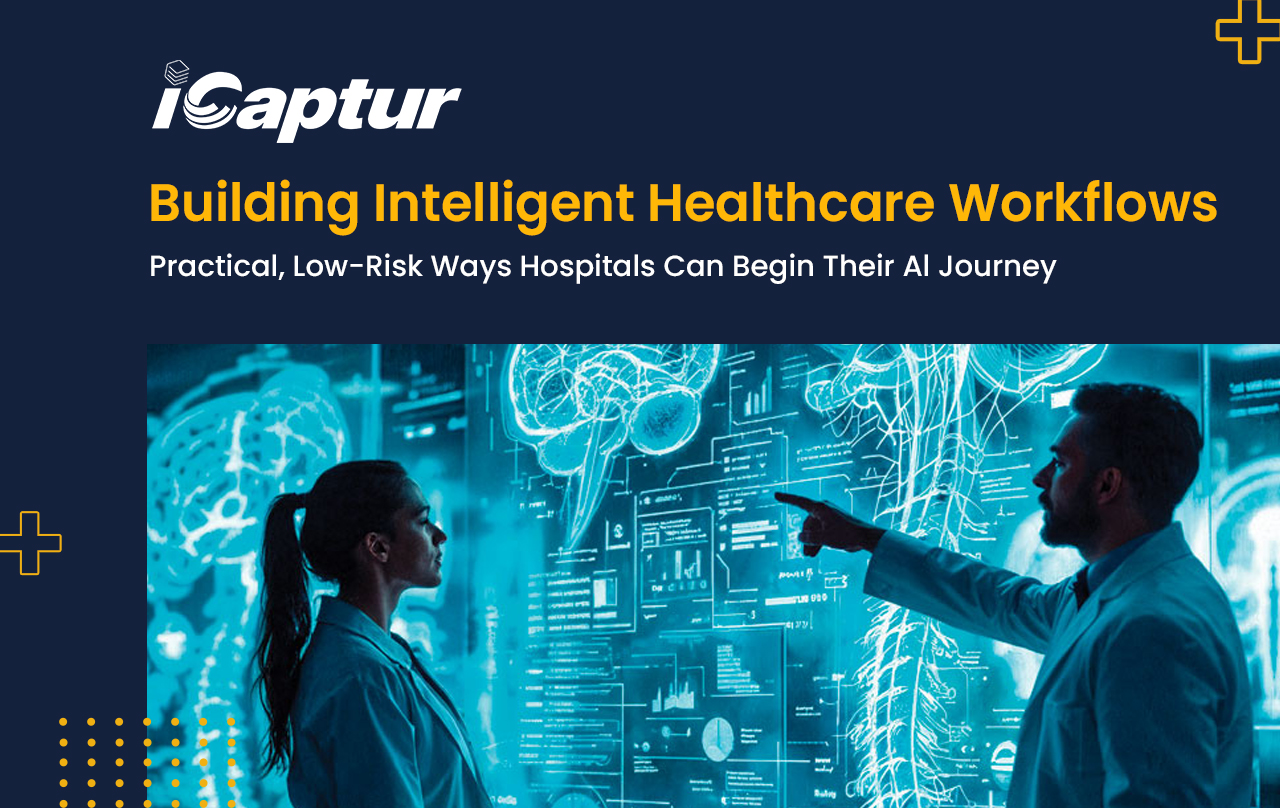
Our whitepaper, “Building Intelligent Healthcare Workflows: Practical, Low-Risk Ways Hospitals Can Begin Their AI Journey,” addresses a critical gap in modern healthcare:
despite widespread EHR and HIS adoption, hospitals remain operationally strained. The missing element is intelligent workflow support that handles the coordination, documentation, and administrative tasks overwhelming healthcare teams.
This paper demonstrates that AI’s first real wins are operational, not clinical. Rather than replacing medical judgment, AI delivers immediate value by supporting workflows around clinicians and patients such as documentation validation, referral tracking, discharge coordination, revenue cycle processing, and staffing insights. By embedding AI into existing systems, hospitals can organize information, surface gaps, prioritize tasks, and make data actionable without disrupting clinical practice.
The guide shows how healthcare leaders can achieve measurable ROI by targeting high-friction operational areas. From EOB reconciliation to patient history summarization and staffing forecasts, AI transforms existing hospital data into a proactive efficiency tool—reducing burnout, improving care continuity, and keeping humans firmly in control throughout the process.
What the Whitepaper Covers:
Why healthcare inefficiencies persist despite widespread digital adoption
How AI succeeds when framed as workflow enablement rather than clinical automation
Safe, practical AI entry points across hospital operations
Use cases including documentation support, care coordination, EOB processing, staffing insights, and knowledge access
How AI reduces administrative burden while improving continuity of care
What hospital leaders should expect from early AI solutions in terms of security, compliance, and governance
A step-by-step approach to starting small, limiting risk, and proving value
How workflow-centered AI creates measurable gains in efficiency, staff experience, and patient care
Download the whitepaper to learn how hospitals can begin their AI journey safely—by building intelligent workflows that support clinicians, strengthen operations, and quietly improve care delivery without disrupting existing systems or practices.